Period issues, including loss of menstruation, are often considered inconsequential but can signal serious health concerns. My colleagues and I have reported on a frequently unrecognized condition in which period loss is the body’s response to a combination of too much exercise, not enough calories, and stress.
We share the stories of people with this condition—functional hypothalamic amenorrhea—hearing how seemingly healthy lifestyles adversely affected their fertility, their bodies and their minds. Medical experts say early recognition can make a meaningful difference in recovery.
Through hand-drawn illustrations, I hope the visual story improves awareness of this often overlooked condition.

👇Here’s a glimpse of how it was made:
When considering the medium and style, I first wanted to use soft watercolors to reflect emotional tenderness. But in talking to my team, they pushed back and noted that menstrual challenges don’t feel “soft.” They usually are intense, painful, and emotional.
It really pushed me to rethink and question how we visualize menstrual health as a society. With more brainstorm, a new idea emerged: Kandinsky-like geometric shapes + Spider-Verse-style glitch to visualize cycle disruptions.
I went back to the drawing board and developed a motif of a healthy whole cycle , and the glitched cycle as a disrupted cycle. I want to show these challenges as temporary, like a glitch, and not that our bodies are broken.

I wanted to pull readers in from the start of the article. In earlier versions (the top two sketches below), the glitchy geometric shapes and soft watercolor clashed. With more iterations, I started to leaned fully into the idea that “circle = cycle”, which developed to the final version (bottom right), showing a healthy cycle that glitches to a disrupted cycle.
You can see the concept evolve across the page to the final visual iteration, from the early geometric shapes to using the glitch circles fully, even to highlight key text. The visual motif became a way to guide the reader through the emotional and narrative arc of the story.

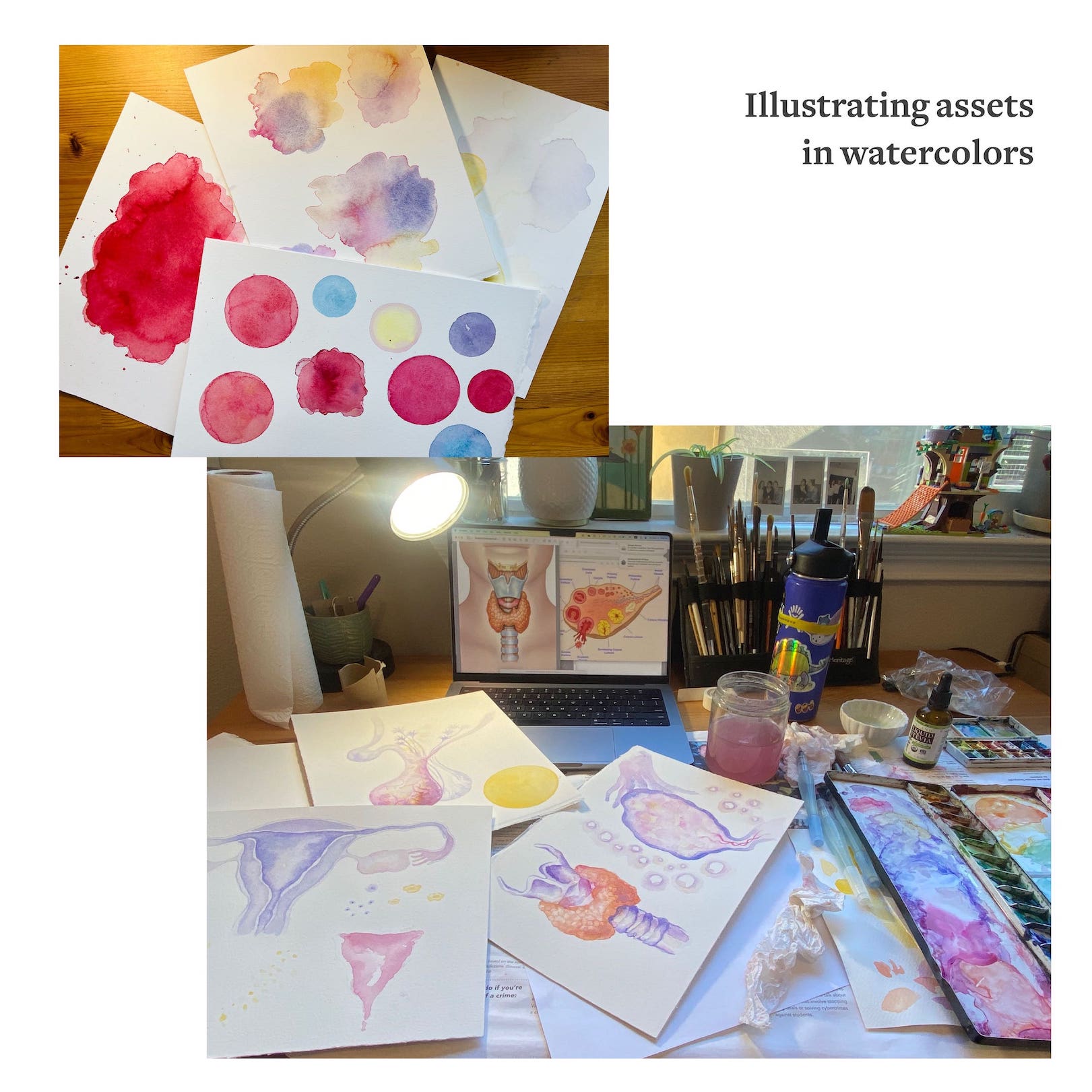
As a watercolorist at heart, I wanted to use real paint, not digital, to show that a real person who cares made this. I love the “happy accidents” that watercolor washes create. They bring brightness and unpredictability to the work.
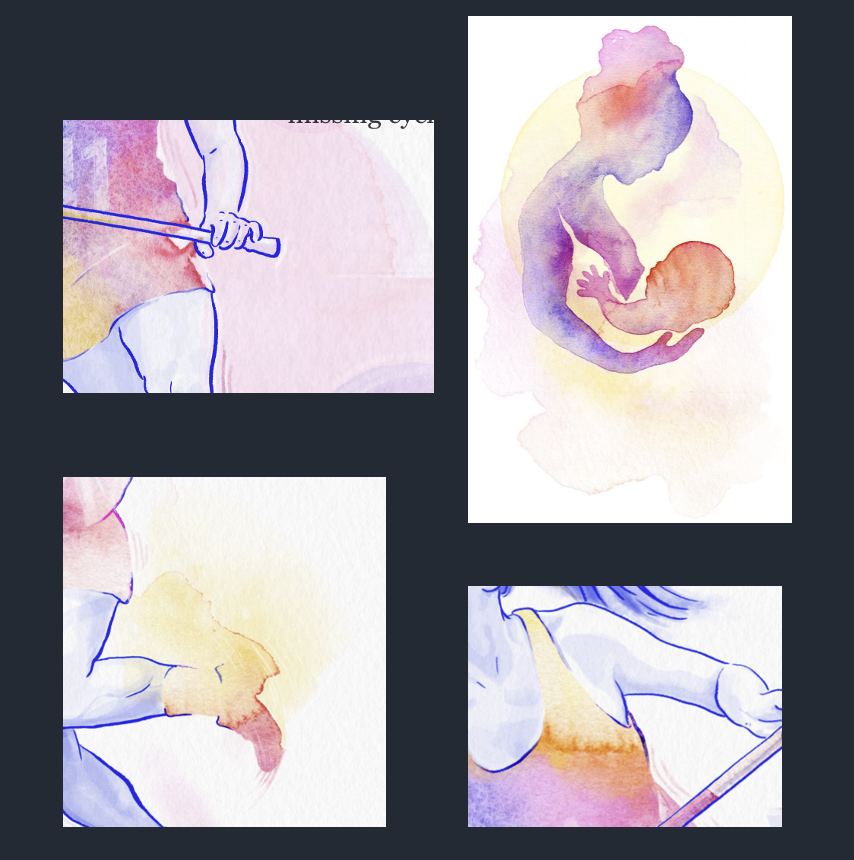
Watercolor process Happy accidents in washes


Here’s a peek at the layers behind the character illustrations. The outlines were drawn digitally, but the watercolor washes add vibrant blends and organic edges that make the art feel alive and human.
We also worked with the video team to produce a video explainer, showing how period loss due to hypothalamic amenorrhea is just one component of a more complex condition called REDs (Relative Energy Deficiency in Sports)
Check out my other projects!